5 Ton Overhead Crane Types & Uses in Kazakhstan Guide
menu_open
Content Quick Link
Most Important Takeaway
For Kazakhstan buyers, choosing a 5 ton overhead crane is not about picking a model from a catalog. It is about matching the crane type with your workshop structure, lifting tasks, and working flow.
The same 5 ton capacity can behave very differently depending on whether you choose single girder, double girder, European, or underhung design overhead cranes.
In practical projects, wrong overhead crane type selection usually causes more problems than wrong capacity.
What You Should Focus On as a Buyer
- Which crane type fits your workshop layout and height
- What kind of materials you are lifting every day
- Whether you need smooth precision lifting or simple handling
- How often the crane will be used in production
- Whether your building is new or already existing
- How much installation flexibility you need on site
Questions This Guide Helps You Decide
Common decision-making questions about overhead crane selection for industrial workshops.
Should I choose single girder or European crane for my factory?
A: The right choice depends on your workshop structure, lifting height requirement, and production intensity, not just the price difference between crane types.
In many industrial searches like "single girder overhead crane vs European type for workshop", "which crane is better for factory production line", or "cost-effective bridge crane for steel plant workshop", buyers are really comparing headroom efficiency and long-term operation stability. A single girder crane is commonly used in standard fabrication shops, while European-style systems are preferred when users need smoother operation, better hook approach, and more efficient use of limited workshop height in modern industrial buildings.
Do I really need a double girder for 5 ton lifting?
A: In most cases, a 5 ton overhead crane lifting requirement does not automatically require a double girder overhead crane.
When buyers search phrases like "is double girder necessary for 5 ton overhead crane", "5 ton bridge crane selection for steel workshop", or "single girder vs double girder for 5 ton load", the real concern is usually safety margin, duty class, and future expansion. A single girder or European single girder crane is often sufficient for 5 ton applications, while double girder becomes relevant only when the workshop needs higher lifting height, heavier duty cycles, or handling oversized steel materials such as coils or long structural components.
Which crane works best in low-height workshops in Kazakhstan?
A: Low-height workshops typically perform best with low headroom single girder or European-style overhead cranes designed to maximize hook lifting height.
In real buyer queries such as "low ceiling workshop crane solution Kazakhstan", "overhead crane for limited building height steel plant", or "how to increase hook height in existing factory building", the core issue is clearance limitation. Low headroom crane designs reduce structural dead space in the hoist and trolley system, making them ideal for retrofit workshops, metal fabrication plants, and machinery assembly halls where building modification is not possible.
What crane type is better for steel, machinery, or warehouse use?
A: The best crane type depends on the material handling characteristics and production workflow of each industry rather than a single universal model.
In practical search behavior like "steel coil handling crane for workshop", "overhead crane for machinery manufacturing assembly line", or "warehouse bridge crane for material handling system", buyers are trying to match load type with operational frequency. Steel plants often require double girder systems for heavy-duty and continuous lifting, machinery workshops prefer single girder or European cranes for precision assembly, while warehouses typically rely on simpler configurations optimized for moderate loads and fast cycle handling.
How do I avoid buying a crane that doesn't fit my building?
A: The most reliable way is to match crane design with actual workshop dimensions, runway structure, and lifting height requirements before confirming tonnage.
Many procurement-related searches like "how to calculate overhead crane clearance before installation", "bridge crane runway beam spacing requirement", or "mistakes when buying industrial overhead crane for existing factory" come from installation issues after purchase. Key factors include effective hook height, column spacing, runway beam alignment, and power supply layout. A crane that looks correct on paper can still fail in practice if building constraints and future expansion needs are not considered early.
5 Ton Overhead Crane Types in Kazakhstan
How different 5 ton overhead bridge crane types are selected and used in Kazakhstan industrial workshops.
5 Ton Overhead Crane Types for Material Handling
In Kazakhstan workshops, a 5 ton overhead crane is used in many different industries. You will see it in steel workshops, machinery plants, maintenance bays, and warehouse buildings. Different places, same idea—lifting and moving materials inside a fixed working space.
But here is the point many buyers only understand after installation. The overhead bridge crane is not chosen just because it is "5 ton". The decision is about how the workshop overhead crane fits the workshop structure, roof height, and daily working flow.
Sometimes it is a small change in design, sometimes it is a completely different crane type. This is where selection really matters. If you have any particular problems or needs, please feel free to contact us. WhatsApp: + 86 151 3871 1597.
How 5 Ton Overhead Cranes Are Used in Daily Work
In most Kazakhstan factories, the electric overhead crane does not work in a complicated way. It is used for simple but repeated lifting tasks.
Typical working pattern looks like this:
lift → move → place → repeat.
Common operations include:
- Moving steel parts from cutting area to welding station
- Lifting motors or gearboxes during maintenance
- Handling molds in production lines
- Loading and unloading warehouse goods
It sounds simple, but the load, size, and frequency are not always the same. That is why different crane structures are used.
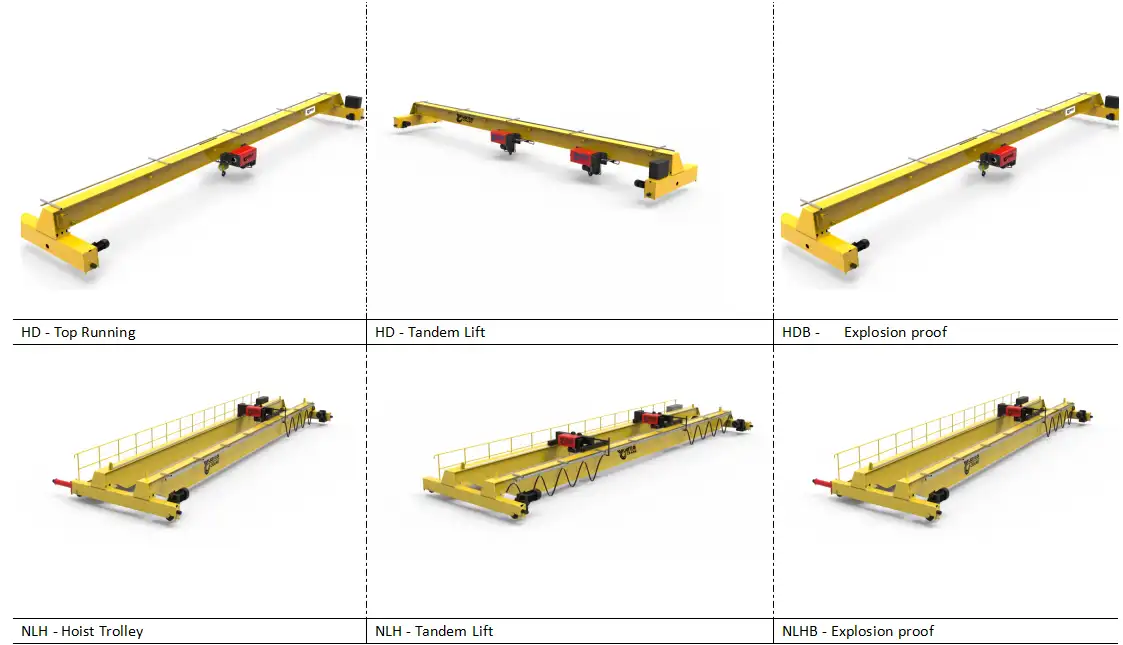
Main Types of 5 Ton Overhead Cranes Used in Kazakhstan
In many industrial projects, four main types are commonly selected. Each one solves a different workshop situation.
Single Girder Overhead Crane -Most Common Choice for Light Duty & Short Span Application
This is the typical overhead bridge crane type you will see in many medium workshops in Kazakhstan.
It is usually selected when the job is general material handling, nothing too special.
Typical use conditions:
- Standard workshop height
- Regular daily lifting tasks
- Medium production volume
What it usually handles:
- Steel plates and small beams
- Machine parts and motors
- General warehouse goods
Simple structure. Easy to install. Not complicated to maintain. That is why many factories choose it for basic production work for general material handling.
Double Girder Overhead Crane -For Heavier and Stable Work, Large Span & Higher Working Duty
The doube girder crane type is used when the load is not only heavy but also large in size or needs stable lifting.
It is not always about lifting 5 ton straight weight. Sometimes it is about control.
Typical situations:
- Long steel structures
- Large machine assemblies
- Workshops with frequent lifting cycles
What makes it different is stability. The structure is stronger, so it handles larger and more uneven loads more safely.
But it also needs a stronger building structure. That is something buyers must check early.When not sufficient supporting structure in your facility , the freestanding runway colums are also needed.
European Style Overhead Crane - Low Headroom & Advanced Solution for High Precision & Morden workshops
In many Kazakhstan projects, especially new workshops, European type overhead cranes are becoming more common.
The main reason is simple. Workshop height is often limited.
In industrial crane projects, like the 11.58m span and 4.652m lifting height case, this type helps save vertical space.
It is often used in:
- Machinery assembly workshops
- Mold handling areas
- Precision production lines
Typical loads:
- Molds and dies
- Machine components that need careful positioning
- Equipment used in assembly work
Operators usually feel the difference in control. Movement is smoother. Load swings less. It is easier to place parts in exact positions.
Underhung Crane- Ceiling Mounted Type, Used When Structure Is Limited
This under running overhead crane type is less common, but very useful in some Kazakhstan workshops where building structure cannot support a normal runway beam system.
It runs under the roof structure instead of on top of it.
Used when:
- Existing building cannot be modified
- Space is limited for runway installation
- Retrofit workshop projects
Typical loads:
- Light machine parts
- Tools and small equipment
- Maintenance components
It is not for heavy or long lifting work. It is mainly used when installation conditions are restricted.
Practical Point for Buyers in Kazakhstan
From industrial project experience, one thing becomes clear.
Same 5 ton capacity, different crane type = completely different working result.
So before choosing, buyers usually need to check:
- What exactly is being lifted every day
- Whether the workshop is new or already built
- How much roof height is available
- Whether lifting is frequent or occasional
It is better to start from the workshop situation, not from the crane catalog. That approach avoids most installation problems later.
Because in industrial crane projects, the crane does not work alone. It works inside your building, your production flow, and your daily operations.
Single Girder 5 Ton Overhead Crane -Most Practical Choice for Kazakhstan Workshops
Why single girder 5 ton overhead cranes are widely used in Kazakhstan industrial workshops and how they perform in industrial operations.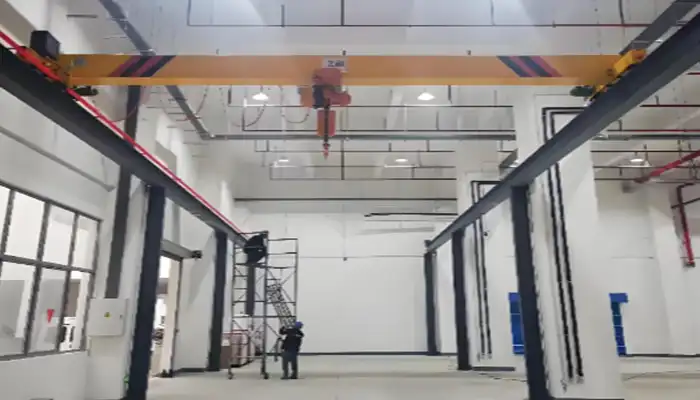
Single Girder 5 Ton Overhead Crane Overview
In many Kazakhstan factories, people usually say it in a very straightforward way: "we just need a reliable crane for daily work." Not something too complicated, not over-designed. Something that works, day in and day out.
That is exactly where the single girder 5 ton overhead crane fits in.
It is not the most advanced system, but in industrial workshop life across Almaty, Karaganda, Shymkent, and industrial zones around mining and steel areas, this type is often the first choice when the job is clear and the budget needs to stay under control.
No extra complexity. Just practical lifting that gets the work done.
When Kazakhstan Buyers Usually Choose It
From industrial crane project experience, buyers in Kazakhstan tend to choose this type when the workshop situation is stable and the production is straightforward.
Typical conditions are:
- The workshop height is standard and does not require special low-headroom design
- Daily work involves medium-weight lifting, not extreme heavy loads
- Investment needs to stay balanced with other workshop expenses
- Production is steady, not high-intensity 24-hour heavy duty operation
In many cases, business owners will say something like: "We don't need luxury equipment, we need something that won't stop our work." That mindset is very common in real procurement decisions.
What It Handles in Real Factory Work
In Kazakhstan workshops, this crane is not sitting idle. It is used every day, sometimes many times a day.
Typical real loads include:
- Electric motors and gearbox units during repair or replacement work
- Steel plates, welded frames, and fabricated structures in production lines
- Machine parts moving between assembly and processing areas
- Packed industrial materials in warehouse and logistics operations
It is simple work, but important work. If the crane stops, production slows down. So reliability matters more than anything else.
Many local workshops prefer this type because it does not "overthink" the job. It just lifts and moves materials smoothly.
Practical Buyer Note (What Experienced Kazakhstan Buyers Usually Say)
If you talk to workshop managers or plant engineers in Kazakhstan, you will often hear a very practical approach:
"If the job is normal, don't over-design it."
That is the thinking behind choosing a single girder 5 ton crane.
It is commonly used in:
- Small and medium manufacturing plants
- Maintenance workshops supporting mining or industrial equipment
- Steel fabrication workshops with regular production flow
- Warehouses handling industrial goods and parts
It fits well where work is steady and predictable. No need for complex systems, no unnecessary engineering cost.
In real business terms, it is a "stable working tool" rather than a high-end system. And for many Kazakhstan factories, that is exactly what they want—something that works, is easy to maintain, and does not interrupt daily production rhythm.
Double Girder 5 Ton Overhead Crane -For Stable Operation and Continuous Workshop Work in Kazakhstan
Where double girder 5 ton overhead cranes are used in Kazakhstan and why stability becomes the key selection factor in real industrial conditions.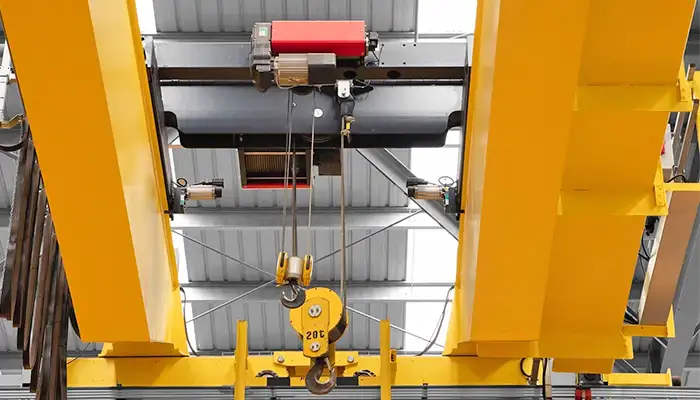
Double Girder 5 Ton Overhead Crane Overview
In Kazakhstan industrial workshops, people usually do not choose a double girder crane just because it is "stronger." The real reason is more practical. It is chosen when the work is not simple lifting anymore, but requires stability, control, and repeated daily operation without compromise.
In steel plants around Karaganda or heavy fabrication workshops near industrial zones, you will often hear a simple explanation from engineers: "We need something stable when the load is long or not easy to balance."
That is where the double girder 5 ton overhead crane comes in.
When It Makes Sense in Kazakhstan Projects
This type is selected when normal single girder performance is not enough for the working condition.
Typical situations include:
- You need more stable lifting when handling uneven or long loads
- The workshop deals with steel structures that are not easy to balance
- The crane runs lifting operations many times throughout the working day
- The production line requires more controlled and accurate positioning
In industrail factory discussions, buyers often focus less on "5 ton capacity" and more on how the load behaves during lifting. If it swings, shifts, or needs careful positioning, they lean toward double girder design.
What It Handles in Real Workshop Work
In actual Kazakhstan industrial use, this crane is not used for small or simple parts. It is used when the material size and shape require stronger control.
Common loads include:
- Long steel beams and structural sections used in construction or fabrication
- Large machine assemblies that cannot be lifted safely with basic systems
- Equipment modules that require stable lifting without tilt or swing
In practice, it is often seen in steel processing plants, heavy equipment workshops, and manufacturing facilities where parts are large, not just heavy.
Practical Buyer Note from Kazakhstan Workshop Reality
From industrial crane project experience, double girder cranes are not about over-design. They are about reducing risk during lifting.
If your workshop deals with materials that are:
- Long in shape
- Difficult to balance
- Or require precise placement during assembly
Then this type gives more control and stability during operation.
However, there is a practical point that Kazakhstan buyers always consider.
This crane type puts more load on the building structure. So before installation, it is important to confirm:
- Whether the workshop steel structure can handle higher wheel pressure
- If runway beams are designed for double girder loads
- Whether the building is new or already reinforced
In many cases, experienced plant managers will say: "If the building is ready, this crane works very well. If not, we plan it first."
That is the practical approach in real Kazakhstan industrial projects—balance between performance and structure readiness, not just choosing the strongest option.
European Style 5 Ton Crane-Common Choice for Modern Workshops in Kazakhstan
Why European style 5 ton overhead cranes / low headroom overhead cranes are increasingly used in modern Kazakhstan workshops and what practical problems they solve.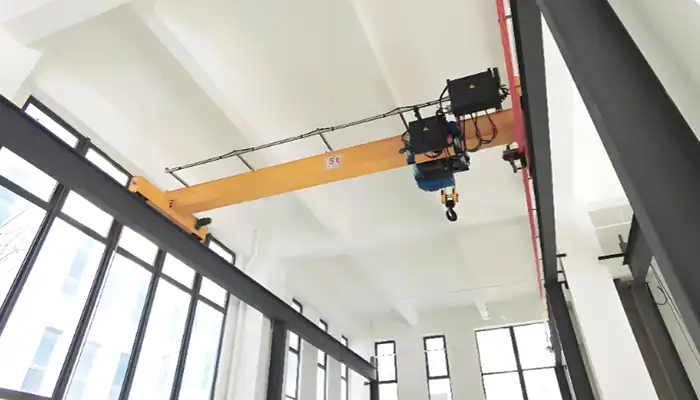
European Style 5 Ton Crane Overview
In Kazakhstan, especially in newer industrial zones and upgraded factories, many buyers are slowly moving toward European style overhead cranes. Not because it looks different, but because it fits modern workshop expectations better—cleaner operation, better control, and less adjustment after installation.
In practice, engineers and workshop owners often describe it simply: "We want smoother work and less trouble later." That sentence alone explains why this type is gaining attention.
When You Should Choose It in Real Workshop Conditions
The advanced overhead crane type is usually selected when the workshop design already has some limitations or when the factory is planning long-term stable production.
Typical situations include:
- Your workshop has limited roof height and you want to use every centimeter of lifting space
- You need more precise control during lifting and positioning work
- You prefer a system that requires less routine adjustment and maintenance
- You are building a new production workshop and want a more modern setup from the beginning
In Kazakhstan projects, especially in cities with growing manufacturing activity, buyers often prefer this type when they want to "build it once and run it smoothly."
What It Handles in Real Workshop Operation
European style 5 ton cranes are not only about structure. They are used in tasks where accuracy and smooth movement matter more than rough lifting power.
Typical applications include:
- Precision molds and dies used in plastic and metal forming workshops
- Machine components that need careful alignment during installation
- Assembly line equipment where positioning accuracy affects production flow
- Finished goods handling in packaging and production plants
In real factories, operators often notice one thing: the crane responds more smoothly during start and stop movements. That makes a difference when placing parts in tight spaces.
Practical Buyer Note from Kazakhstan Project Experience
This is the same type used in the Kazakhstan case project with a 4.652m lifting height. That detail is important.
In many older workshops in Kazakhstan, ceiling height is not generous. So every bit of lifting space matters.
From real installation experience, buyers often realize:
"If the height is tight, standard cranes start to feel limited."
That is where European design becomes practical. It helps you:
- Gain more usable hook height without changing the building
- Reduce wasted vertical space in the hoisting system
- Improve working comfort in compact workshops
In simple terms, it makes the existing workshop work better, instead of forcing structural changes.
For many Kazakhstan buyers, especially in new manufacturing projects, this is the key point—not just modern design, but practical space efficiency that supports daily production without complications.
Underhung 5 Ton Overhead Crane -For Limited Workshop Structures in Kazakhstan
How underhung bridge crane 5 ton are used in Kazakhstan workshops where building structure limitations prevent standard overhead crane installation.
Underhung 5 Ton Crane Overview
In Kazakhstan industrial practice, underhung overhead cranes are not the first option people think of. But in some industrial workshops, especially older buildings or upgraded facilities, this type becomes the only workable solution.
Many buyers in such cases do not start by asking for this crane type directly. It usually comes after a simple situation check: "The building cannot be changed, but we still need lifting inside."
That is where the underhung 5 ton electric overhead crane is used.
When You Should Choose It in Your Pratical Workshop Conditions
This crane type is selected when the workshop structure creates clear installation limitations. It is not about preference. It is about working with what already exists.
Typical conditions in Kazakhstan include:
- The building structure cannot support overhead runway beams on top
- The factory is upgrading an older workshop and cannot rebuild steel columns
- Installation space inside the building is limited, especially near roof structure or beams
- The owner wants to add lifting capability without major construction work
In industrial crane projects, this type is often chosen in retrofit situations where production must continue and structural changes are not practical.
What It Handles in Industrial Workshop Work
Underhung cranes are generally used for lighter and more frequent handling tasks inside a workshop environment.
Typical applications include:
- Light machinery components moved during assembly or repair
- Maintenance tools and equipment used in workshop servicing
- Small production parts transferred between stations
It is not designed for heavy structural lifting. Instead, it supports flexible movement inside constrained spaces.
In many Kazakhstan workshops, it is used in maintenance zones or secondary production areas where lifting is needed but space is restricted.
Practical Buyer Note from Kazakhstan Workshop Experience
From real installation experience, this type is often described by engineers as a "solution when there is no easy solution."
It is not chosen for performance upgrades. It is chosen for compatibility with existing buildings.
In practical terms, it is used when:
- Standard overhead crane installation is not possible
- The building structure must remain unchanged
- The factory still needs safe and regular lifting operations
In simple workshop language, many buyers summarize it like this:
"We cannot change the building, but we still need to work."
That is exactly the role of the underhung bridge crane 5 ton.
For Kazakhstan buyers dealing with older facilities or constrained workshop layouts, this type provides a practical way to add lifting capability without major reconstruction or production interruption.
How Different Industries in Kazakhstan Actually Use 5 Ton Cranes
In industrial applications of 5 ton overhead cranes across machinery, steel, mining, logistics, and production workshops in Kazakhstan.
Industry-Based Crane Selection in Kazakhstan
In Kazakhstan, choosing a 5 ton overhead crane is usually not done in isolation. Buyers often decide based on one simple question: "What exactly are we lifting every day?"
Different industries use the same 5 ton capacity in very different ways. And if this part is not clear, it is easy to select the wrong crane type or structure.
Below is how 5 ton cranes are actually used in real Kazakhstan workshops.
Machinery Workshops
In machinery plants and maintenance workshops, work is usually continuous and practical. Nothing too complicated, but it needs regular lifting support.
Daily work typically includes:
- Motor installation and positioning during assembly or repair
- Gearbox handling for maintenance or replacement
- Machine assembly support during production setup
Typical loads are not extreme, but they are sensitive. Many parts require careful placement rather than fast movement.
- 200 kg to 3–5 ton mechanical components
- Engine units, motor bodies, and machine frames
In industrial workshop use, operators often say: "It's not heavy every time, but it needs to be accurate."
Steel Fabrication Plants
In steel workshops across Kazakhstan, cranes are part of the daily production flow. Work is repetitive and material size varies.
Daily work includes:
- Feeding steel plates into cutting or welding stations
- Supporting welding line operations
- Assembling structural steel components
Typical loads are more about size than just weight:
- Steel plates of different thickness
- Beams, channels, and structural sections
- Welded frames and fabricated assemblies
Here, crane stability matters more than speed, especially when handling long or uneven steel pieces.
Mining Maintenance Workshops
Kazakhstan mining-related industries rely heavily on maintenance facilities. These workshops often deal with heavy and irregular equipment repair.
Daily work includes:
- Disassembly and repair of mining equipment
- Motor replacement and gearbox servicing
- Spare part movement during maintenance cycles
Typical loads include:
- Large mining motors
- Gear systems and transmission parts
- Heavy mechanical assemblies used in mining operations
In industrial conditions, downtime is expensive, so the overhead crane must be reliable and ready for frequent use during maintenance periods.
Warehouses and Logistics Centers
In logistics operations, the crane is used more for movement efficiency than production support.
Daily work includes:
- Loading and unloading trucks
- Moving stored industrial goods
- Internal transfer of heavy materials between zones
Typical loads:
- Industrial pallets
- Packed machinery and equipment
- Heavy boxed goods used in industrial supply chains
In these environments, smooth operation and ease of use are more important than advanced lifting functions.
Packaging and Plastic Factories
In packaging and plastic production plants, cranes are closely connected to production flexibility.
Daily work includes:
- Mold change operations during production shifts
- Equipment adjustment and setup
- Production line support and maintenance
Typical loads:
- Injection molds used in plastic forming
- Production tools and die sets
- Finished packaged industrial goods
In industrial factory operation, timing is important here. When molds need to be changed, the crane becomes part of the production schedule.
Practical Buyer Insight
From real Kazakhstan project experience, one simple conclusion stands out.
The same 5 ton crane can behave very differently depending on industry use.
That is why experienced buyers usually start from the question:
"What do we lift every day, and how often?"
Once that is clear, choosing between single girder, European style, or double girder becomes much easier—and mistakes in selection are greatly reduced.
Simple Buyer Rule: How to Choose the Right 5 Ton Crane in Kazakhstan
A practical decision framework used by Kazakhstan buyers to select the correct 5 ton overhead crane based on industrial workshop conditions.
Simple Buyer Rule Overview
In Kazakhstan workshop projects, experienced buyers usually don't start by asking "which crane type is better." That approach often leads to confusion.
Instead, they start from something much more practical: the workshop condition and daily lifting task.
A local factory manager would usually put it in a simple way—"Tell me what you lift, and where you lift it." That's enough to narrow down the choice.
Practical Selection Logic Used in Real Projects
For most 5 ton overhead crane purchases in Kazakhstan, the selection can be simplified into clear working conditions:
- Low workshop height → European style crane
Used when the building is tight in height and every centimeter of lifting space matters. It helps increase usable hook height without rebuilding the structure. - Heavy + long steel → double girder crane
Used when materials are not just heavy but also long or unstable, such as beams or structural steel sections. Stability becomes the key factor. - General factory use → single girder crane
Used for normal production environments where lifting is regular but not extreme. This is the most common choice in many workshops. - Structural limitation → underhung crane
Used when the building cannot support standard runway beams or when installation space is restricted. It adapts to the structure instead of changing it.
Practical Buyer Mindset in Kazakhstan
In many Kazakhstan projects, especially in manufacturing and industrial zones, buyers often focus on practical outcomes rather than technical classification.
A common approach is:
- First check the workshop layout
- Then confirm what is being lifted daily
- Finally match the crane type to real working conditions
Not the other way around.
Because in industrial use, the crane is not selected for theory. It is selected for daily production.
Final Practical Note
One simple rule is often repeated by experienced engineers:
"Do not start from crane type. Start from your workshop."
Once the working environment and lifting tasks are clear, the correct 5 ton crane type becomes much easier to choose—and installation problems later are greatly reduced.
Common Mistakes Buyers Should Avoid (Kazakhstan 5 Ton Overhead Crane Projects)
Industrial -world insights from Kazakhstan projects on common errors during crane selection and planning.
Choosing Crane Only Based on Price
This is the most frequent mistake.
Many buyers first look at price, and only price. But in industrial crane projects, a cheaper crane can lead to higher long-term cost if it does not match the workshop.
Typical results include:
- Higher maintenance frequency
- Lower operational efficiency
- Additional modification after installation
In Kazakhstan industrial practice, experienced buyers usually compare not only price, but also structure, height fit, and workload suitability.
Ignoring Workshop Height Limitation
This is especially common in older factories or tight workshop buildings.
If lifting height is not checked properly, problems appear later:
- Hook cannot reach required working level
- Load movement becomes restricted
- Crane performance feels "limited" even if capacity is correct
In industrial crane projects, this is why European low-headroom cranes are often selected when building height is tight.
Not Checking Steel Structure Condition
Many buyers assume the building can support any crane.
In reality, runway beams, columns, and load-bearing structure must match crane type.
If not checked:
- Beam deformation risk increases
- Uneven rail alignment may occur
- Long-term safety issues may appear
In Kazakhstan, especially in older industrial workshops, this step is often underestimated.
Mixing Load Types in One Crane Selection
Another common issue is trying to use one crane for too many different tasks.
For example:
- Lifting both long steel beams and precision molds with the same system
- Using one crane for both heavy structural work and fine assembly
This often leads to poor efficiency, because different loads require different stability and control levels.
In industrial workshop planning, each crane should have a clear working purpose.
Not Confirming Actual Lifting Objects Before Order
This sounds simple, but it causes many installation problems.
Some buyers only provide "5 ton requirement" without explaining:
- What exactly is being lifted
- How often lifting happens
- Whether loads are long, uneven, or sensitive
Without this information, crane type selection may not match real production needs.
In Kazakhstan projects, experienced engineers usually ask one basic question first:
"What are you lifting every day?"
Practical Summary for Buyers
Most issues in 5 ton overhead crane projects in Kazakhstan are not technical failures. They come from missing information at the beginning stage.
To avoid problems, buyers should always confirm:
- Workshop structure and height
- Real lifting objects and weight range
- Daily working frequency
- Suitable crane type before price decision
When these points are clear, installation is smoother, operation is stable, and the crane performs as expected in real production conditions.
Conclusion
In Kazakhstan industrial practice, a 5 ton overhead crane is never just a standard machine with a fixed structure. It is a working tool that must fit into very different workshop conditions, from steel fabrication shops to machinery maintenance halls and warehouse facilities.
That is why the same "5 ton crane" can end up being completely different in industrial crane projects—single girder, double girder, European style, or underhung. Each one responds to a specific working situation, not just a technical specification.
In daily factory use, experienced buyers usually keep things simple and practical. The decision is not made in theory, but in how the workshop actually runs.
Practical Selection Logic for Kazakhstan Buyers
From industrial crane project experience, the selection process can be summarized in a very direct way:
- Match crane type with real load and material shape
- Match crane design with workshop structure and height condition
- Match lifting system with daily production rhythm and frequency
When these three points are clear, the crane works as part of the production line instead of becoming a limitation or a source of adjustment work after installation.
Final Practical Insight
In Kazakhstan industrial projects, the right 5 ton overhead crane is not the most expensive one, and not the simplest one either.
It is the one that fits the workshop as it is—without forcing major structural changes or interrupting production flow.
When the crane is properly matched to the real working environment, it becomes a stable part of daily operations. Lift, move, place—smooth and consistent. That is what matters most in real factory use.

Article by Bella ,who has been in the hoist and crane field since 2016. Bella provides overhead crane & gantry crane consultation services for clients who need a customized overhead travelling crane solution.Contact her to get free consultation.